Therapy Access Options for Employees: A Practical Guide for UK Businesses
A productive workplace starts with people feeling genuinely supported, not just covered by a policy nobody understands. Most employees who are struggling never make it to a formal counselling claim. They just quietly cope, and that quiet coping is what eats into morale, focus, and eventually retention. Getting therapy access right is one of the highest leverage things a business can do for its people.
Below is a practical breakdown of what therapy access actually means in 2026, how EAPs work and where they fall short, and how to build something employees will actually use.

What Therapy Access Options Actually Look Like
There isn't one single answer here. Therapy access comes in a few different shapes, and most businesses end up needing more than one.
Employee Assistance Programmes (EAPs) are the traditional starting point. They offer confidential counselling, usually a handful of short-term sessions, bundled in alongside other benefits.
Online therapy platforms let employees speak to a therapist by video, phone, or chat, on their own schedule. Useful for remote or hybrid teams, or anyone who can't easily get away during the working day.
In-person referral partnerships connect a business with local therapists or clinics who offer discounted or priority slots for staff.
Group sessions, run in-house or virtually, give people a space to talk through shared pressures like stress or workload.
Wellbeing workshops on things like mindfulness or resilience sit alongside all of the above, but they're not a substitute for actual one-to-one support.
Each has a place. Online therapy suits people with unpredictable schedules. Group sessions build a sense that people aren't struggling alone. The strongest setups tend to combine more than one of these rather than relying on a single channel.
How EAPs Actually Work, and Where They Fall Short
EAPs are usually bundled into a company's health insurance or bought as a standalone add-on, and qualifying for one is straightforward in theory:
Check what's already included in your existing benefits package. Many insurance plans quietly include EAP access that nobody's told staff about. Speak to providers directly to compare what's actually offered, not just the headline pitch. Confirm eligibility, most EAPs cover the whole workforce and sometimes immediate family. Once it's live, access is usually confidential and available around the clock. None of that matters if people don't know it exists, so awareness has to be built in from day one.
Here's the part most businesses don't realise until they look at the data: EAP utilisation typically sits at 1 to 5 percent. The vast majority of employees who could benefit simply never use it. That's not because people don't need support, it's because the access itself comes with friction: a phone call to make, a referral process to navigate, a sense that you have to be "bad enough" to justify using it. For a lot of people who are struggling but not in crisis, that bar feels too high, so they just don't bother.
This is exactly the gap that newer models are designed to close, by giving people direct access to a real practitioner with no claims process and no gatekeeping in between.
Making Therapy Genuinely Affordable and Easy to Use
Cost and convenience are the two things that kill uptake, so worth tackling both directly.
Group or company rates bring per-person cost down meaningfully compared with people sourcing therapy privately. Online and hybrid delivery models cut out travel time and tend to cost less than purely in-person setups. Letting people attend sessions during working hours, rather than expecting it to happen on their own time, removes a real practical barrier. Being upfront about confidentiality matters more than most businesses realise, people won't use something they're not sure is private. Subsidising even part of the cost is often enough to shift someone from "I should probably look into that" to actually booking.
A useful comparison here is private health insurance. Something like medical insurance is a strong safety net for serious or long-term health needs, but it's not designed to catch the day-to-day stress, low mood, or burnout that builds up long before anyone meets the bar for a formal claim. The right therapy access model sits alongside that kind of cover rather than competing with it, picking up the people who are struggling but not yet at crisis point.
Building a Culture Where People Actually Use What's Available
Access on paper and access in practice are two different things. A few things move the needle here:
When leaders are open about mental health, even briefly, it gives everyone else permission to take it seriously too. Regular one-to-ones that genuinely ask how someone's doing and reminding them of the support available, rather than just covering tasks, catch problems earlier. The language used around all of this matters, judgement-free framing keeps people from feeling like asking for help is some sort of admission of failure.
Get this right and people actually use what's on offer. Get it wrong and the best benefit in the world sits unused.

A Simple Plan to Get Started
If you're building this out from scratch, here's a sensible order of operations:
Start by asking your own people what they actually need, a short anonymous survey goes a long way.
Look at what's realistically available, EAPs, online platforms, local therapist partnerships.
Set a budget that's honest about what you can sustain, not just what sounds good in a board meeting.
Communicate the offering clearly so nobody's left wondering how to access it.
Track usage anonymously - therapy providers should supply this as standard, if they don't, ask questions. You deserve to know if it's actually working.
And revisit it every few months, adjusting based on what staff tell you.
Done properly, this isn't a cost, it's an investment that shows up in lower absenteeism, sharper focus, and a workplace people actually want to join and then stay at.
Where Soother Fits In
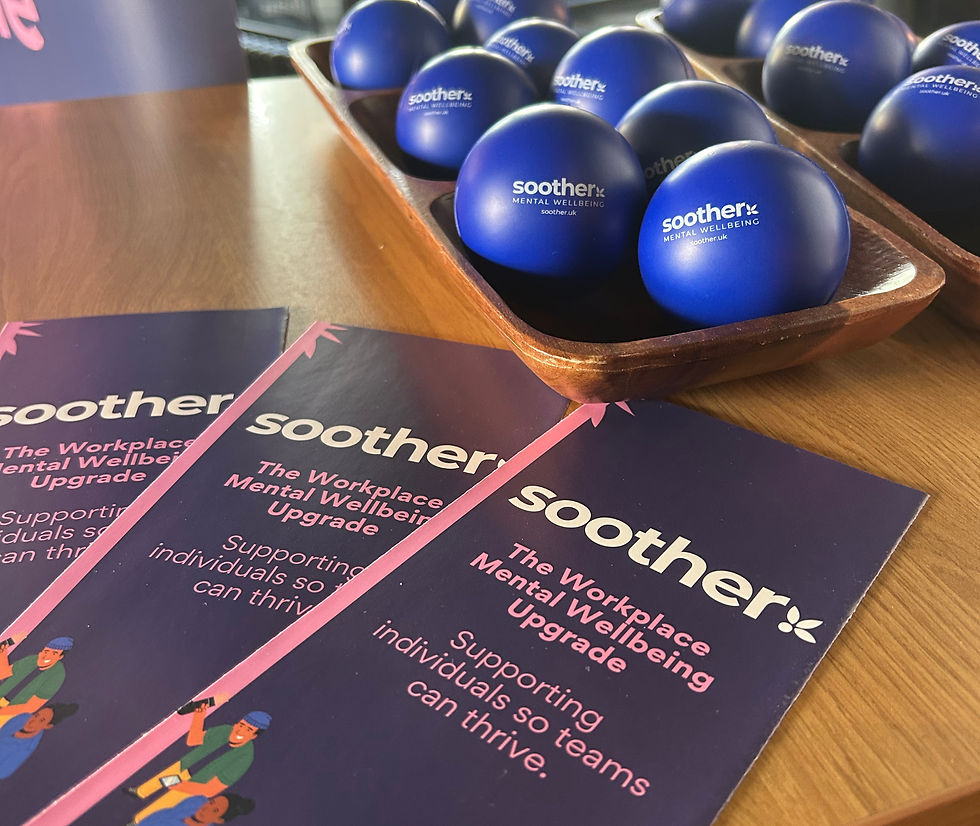
For UK businesses that want something more direct than a traditional EAP, Soother gives employees frictionless access to high-quality professional support practitioners, without a claims process and without the wait. It's built to sit alongside existing benefits like private medical insurance, not replace them, filling the gap for people who are struggling but not enough to make a formal claim. It's the sort of access that means people don't end up needing the safety net as often.
Mental health support isn't a one-off fix, it's an ongoing part of how a business looks after its people. Start the conversation, look at what's actually available, and build something your team will use rather than something that just sits in the benefits handbook.